Prestige Watches Guide
Choose a watch around how you’ll wear it, the fit you enjoy, and the care it will need. This guide covers useful questions about new and pre-owned watches, condition, authenticity, and repairs before you buy.
Start with how the watch will be worn
A good purchase starts before price comparison. Decide whether the watch needs to be a daily wearer, a dress piece, a gift, a collector reference, or a practical serviceable watch for years of use.
That decision affects size, movement, bracelet fit, water resistance, service cost, and whether new or pre-owned makes more sense.
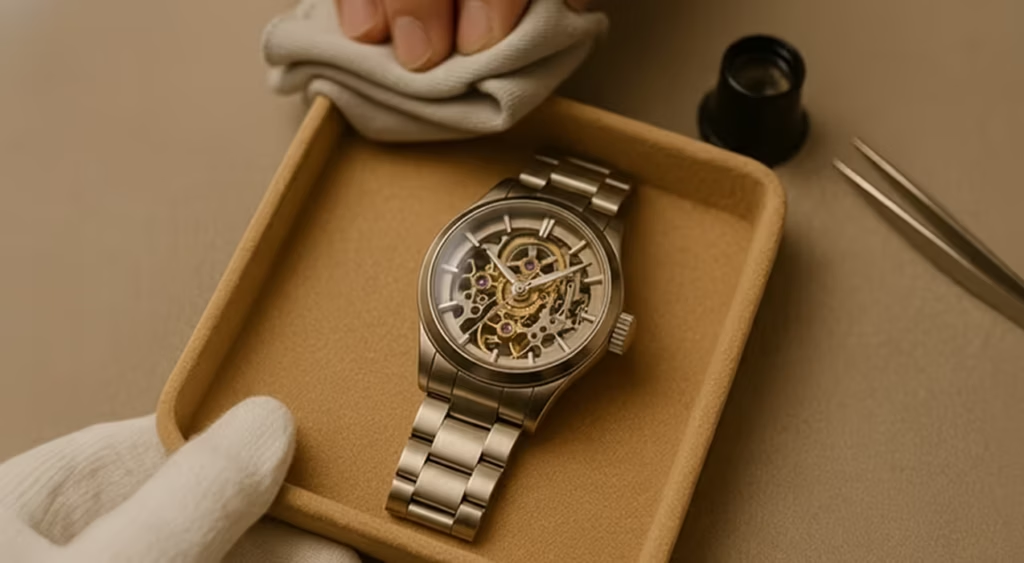
Choose for Your Daily Life
Think about when you’ll wear the watch, how it feels on your wrist, and the care it will need.
Choosing New or Pre-Owned
New watches offer manufacturer warranty clarity, current models, and clean gift presentation. Pre-owned watches can open access to discontinued references, better value, or vintage character, but they require more careful condition review.
Authentication is a process, not a slogan
When evaluating a pre-owned or vintage watch, look beyond a logo. The case, dial, hands, bracelet, clasp, movement, reference details, and service story should make sense together. A watch can be genuine and still have condition or originality details that materially change its value.
01
Identify the watch
Reference, size, production range, movement, and configuration set the baseline.
02
Read the condition
Case, dial, bracelet, polish, moisture, and wear show how the watch has lived.
03
Price the ownership
Service needs, parts, warranty, and fit can matter as much as the sale price.
Prestige Watches & Jewelry reviews pre-owned watches through that lens before listing them. When details are uncertain, the right answer is careful disclosure, not forced certainty.
Condition matters as much as the brand name
- Check case shape, polishing, scratches, dents, and engravings.
- Ask about dial, hands, crystal, bezel, and bracelet condition.
- Confirm whether service parts or replacement components are known.
- Understand what warranty or support applies after purchase.
Fit and service cost belong in the decision
A watch that is too large, too small, or expensive to service can become a poor purchase even if the price looks attractive. Bracelet adjustment, strap options, future parts availability, and service interval should be part of the conversation.
When repair is the better first step
If you already own a watch that is not running, losing time, setting poorly, or showing moisture, get a service review before replacing it. A repair intake can clarify whether the watch needs a battery, adjustment, regulation, cleaning, or a broader service estimate.
A practical checklist before you buy
- Confirm the actual reference, size, movement, and year or production range when available.
- Review photos for case, dial, hands, bracelet, clasp, and crystal condition.
- Ask what is known about service history and water resistance.
- Understand return eligibility before sizing, engraving, special-order work, or gift timing.
- Choose a seller who can answer specific watch questions after the sale.